Pages

Thursday, November 28, 2019

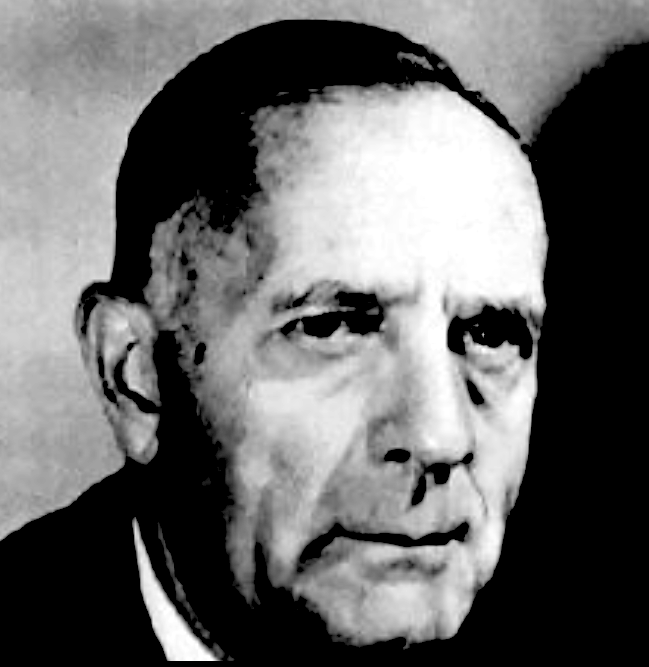
ECO-HERO | William Ruckelshaus, 1932-2019

Obama awards Ruckelshaus (1932-2019) the Medal
of Freedom, the highest U.S. civilian honor.
William D. Ruckelshaus died yesterday. He is someone I have looked up to all my life. In 1955 I entered Portsmouth Abbey (then Priory) School, in Rhode Island, four years after he graduated.

He was at Princeton, class of 1957, when I was at Portsmouth. He was enrolled at Harvard's Law School for two of the four years I was a Harvard undergraduate.

As a young lawyer in the 1960s, Ruckelshaus became a savior of Portsmouth Abbey School. With a Federal law suit, he fended off the siting of an oil refinery on Prudence Island in Narragansett Bay, opposite the school. He eventually slayed, or at least kept at bay, that oil company dragon.

It was not surprising that President Richard Nixon would appoint him, as a 38-year-old  lawyer, to lead the new Environmental Protection Agency in 1970-73 – or that he would return under President Ronald Reagan to run the EPA again in 1983-85. Ruckelshaus was a Republican and a conservationist by family tradition.  His grandfather was Chairman of the Indiana Republican Party in 1900.

What was surprising was Ruckelshaus's becoming one of the two heroes of the 1973 "Saturday Night Massacre". He had been recruited from his perch at the EPA by Attorney General Elliot L. Richardson to become the AG's top deputy. The Watergate prosecutor, Archibald Cox, had subpoenaed nine White House tapes. On October 23, Nixon ordered Richardson to fire Cox. Richardson refused and resigned. The order then went to Ruckelshaus, as next in command. Ruckelshaus also refused and resigned.

The third in command, Robert H. Bork, then followed orders, firing Cox and abolished the office of Watergate prosecutor.

The next day, 300,000 telegrams of outrage descended on the White House. Nixon decided to release the nine tapes after all. Three GOP members of the House Judiciary Committee who had voted against Nixon's impeachment–Reps. Charles Sandman (N.J.), Charles Wiggins (Calif.) and David Dennis (Ind.)–reversed themselves after hearing the tapes. They said they would vote for impeachment on the floor of the House. Nixon resigned before that could happen.

Not long after the Massacre, when Ruckelshaus was back in private practice of law, he kindly took me to lunch at the Hay-Adams Hotel to share with me his front-row experience of the events. In describing the President, he used the term "Unindicted Co-conspirator." I was deeply impressed with his courage and serenity in the face of all he had been through.

In the years that followed, it became clear in news reports that Ruckelshaus was increasingly distressed at the steady decline of the progressive wing of the Republican party. He ended up supporting Barack Obama for President and supported Hillary Clinton over Donald Trump.

Ronald Reagan once said that the didn't leave the Democratic Party; it left him. Ruckelshaus expressed similar sentiments about the Republican Party.

President Obama awarded Ruckelshaus the Medal of Freedom in 2015 for his environmental achievements. The race to succeed Obama was already under way and Donald Trump and Senator Marco Rubio were sparring for the GOP nomination. A few days before the Medal of Freedom ceremony, the Guardian interviewed Ruckelshaus and quoted him as follows:
"The Republicans aren’t helping, they are just responding to the convictions of the base that climate change isn’t a real problem and feeding that back to them – it’s a vicious cycle. Instead of treating it as a serious problem they are going through all the stages of denial. They are now at the stage of saying that it’s too expensive to do anything about climate change, which is no solution at all, they may as well just deny it’s a problem.
“I don’t know what Trump actually knows about climate change, I don’t think Trump thinks much about many of the issues. Rubio shifts around a lot because he hears a lot of different messages from his constituents but what he’s essentially saying is that climate change isn’t a big enough problem to address. That comes down to not dealing with it. It’s concerning and I don’t understand why they don’t see this as an opportunity rather than something to be denied.
“There was huge resistance from the auto industry, they pushed back very hard. The difference from then until now is that the public demanded something be done about pollution and the government listened. The four major auto companies sent their CEOs to lobby against the Clean Air Act and they got about three votes in the Senate and not many more in the House. They thought they’d get it reversed in the Senate.
“In those days you could smell and touch the pollution, it was a bit like how China’s cities are today. That had a galvanizing effect. The greenhouse gases of today, you can’t see or taste or feel them. And it’s got way too partisan. The atmosphere today is completely different to the 1970s; Republicans’ arguments are all partisan driven, they aren’t based on any legitimate analysis of science.”
Some Presidents' Records on the Environment, Since Nixon

President Nixon. In 1970, green issues then had bipartisan support. Clean Air Act amendments to the original 1963 Act created the EPA, William Ruckelshaus became its first head, and new water-pollution laws were passed after two years. But  OPEC's decision to create an oil shortage meant that inflation cascaded through private and public prices and economic concerns overtook environmental ones. The GOP took on the mantle of environmental deregulation in the name of promoting economic growth, although significant instances of environmental progress have occurred under Republican leaders since Nixon.

President Reagan. He cut social and environmental budgets, including one-third of EPA spending, but in his second term he noted the high cost of ozone-depleting chlorofluorocarbon (CFC) gases and he promoted a worldwide reduction via the 1987 Montreal Protocol. This Protocol has been described as the most successful international convention ever, signed by 197 countries and the European Union, and it has stopped the growth of the ozone hole although some aerosol substitutes, such as hydrofluorocarbons, continue to contribute to global warming even though they don't damage the ozone layer.

President George W. Bush. During most of his administration, Bush 43 was, like Reagan, antagonistic to environmental regulation. He did support greater energy efficiency. Also, toward the end of his presidency he championed significant conservation initiatives that became law.

President Barack Obama. Obama made solid appointments–Steven Chu as Secretary of Energy and Lisa Jackson as Environmental Protection Agency Administrator. He supported climate-change proposals at Copenhagen. He put energy efficiency and renewable energy on state agendas, with a $90 billion investment in green jobs in the stimulus bill, encouraging states and localities to focus on needed environmental initiatives. His EPA twice raised auto fuel-efficiency standards, using Nixon's Clean Air Act as the basis for the EPA's higher Corporate Average Fuel Economy ("CAFE") standards, first requiring 35.5 mpg fuel efficiency by 2016 and then 54 mpg by 2025. He regulated carbon emissions under the Clean Air Act. His EPA won a major victory in June 2012 when the U.S. Court of Appeals unanimously affirmed EPA's ruling in 2009 in favor of  measures to regulate carbon emissions. He saved the U.S. auto industry and its technology-generating capacity, keeping the United States as a strong player in electric-car technology and in the campaign to generate more efficient batteries. He used federal purchasing power to reduce carbon emissions.  He supported four rounds of the ARPA-E program for energy technology research. The Advanced Research Projects Agency made awards for research on electrofuels, carbon capture, batteries, electric grid, thermal energy storage, and rare earth substitutes. Obama faced the BP oil spill early in his first term, which discouraged offshore oil drilling. The Fukushima nuclear meltdown discouraged further nuclear power development, constraining his options. Most important, the Republican House of Representatives adopted a totally negative stance, especially after the 2010 Midterm elections,  toward the President's climate-change goals.

Saturday, November 23, 2019

IN LIEU OF FLOWERS | In Nov. 23 NY Times, p. B12

Death Notice, November 23, 2019.
Saturday, November 23, 2019 – This morning I circled this obit for Perry Janoff, who died earlier in the week at the age of 100. (The NY Times calls this an  "Announcement of Death.")   

Alice sent it around to a few friends. 

One recipient has already requested that his death notice include the same message, if still relevant.

Wednesday, November 20, 2019

BIRTH | 130 years ago, Edwin Hubble

Edwin Hubble
This day was born in 1889, 130 years ago, Edwin Powell Hubble, an American astronomer after whom was named the most powerful telescope hitherto sent into space, the Hubble Space Telescope. A model is displayed in his home town of Marshfield, Missouri.

Hubble received a scholarship to  the University of Chicago in 1906 and worked as a lab assistant under Robert Millikan, who won a Nobel Prize later for his work in physics. 

In his senior year at Chicago, Hubble was voted a Rhodes Scholarship, one of the first,  So after graduation in 1910, he enrolled at Queen's College, Oxford, where for three years he studied law and philosophy. He earned a bachelor's degree in jurisprudence. Sadly, about that time, his father, John Hubble, died.

Edwin Hubble helped establish the field of extragalactic astronomy and observational cosmology and is one of the most important astronomers ever. Hubble discovered that many objects previously thought to be clouds of dust and gas and classified as "nebulae" were actually galaxies of their own, beyond the Milky Way of our galaxy. He used the strong direct relationship between a classical Cepheid variable's luminosity and pulsation period, discovered in 1908 by Henrietta Swan Leavitt, for scaling galactic and extragalactic distances.

Hubble provided evidence that the recessional velocity of a galaxy increases with its distance from the Earth, a property called Hubble's Law, though it had been formulated and demonstrated two years earlier by a Jesuit priest, Georges Lemaître, at the University of Louvain. The Hubble–Lemaître law implies that the universe is expanding from a "Big Bang". A decade before, the American astronomer Vesto Slipher had provided the first evidence that the light from many of these nebulae was strongly red-shifted, indicative of high recession velocities. Hubble died September 28, 1953.

Saturday, October 26, 2019

SONNETS TO MATURITY | by Shakespeare and Brigid

Sonnet 73: That Time of Year Thou Mayst in Me Behold 
by William Shakespeare
That time of year thou mayst in me behold
When yellow leaves, or none, or few, do hang
Upon those boughs which shake against the cold,
Bare ruined choirs, where late the sweet birds sang.
In me thou see’st the twilight of such day
As after sunset fadeth in the west;
Which by and by black night doth take away,
Death’s second self, that seals up all in rest.
In me thou see’st the glowing of such fire,
That on the ashes of his youth doth lie,
As the death-bed whereon it must expire
Consumed with that which it was nourish’ d by.
This thou perceivest, which makes thy love more strong,
To love that well which thou must leave ere long. 
(Public Domain) 
Sonnet to John and Alice by Brigid Marlin 
That time of year thou mayst in me behold
When yellow leaves do drop and mess the floor
I cling to wraps, as I do shake with cold.
I wonder if, perhaps, I'm getting old?
My voice doth croak when sweet I wish to sing
The twilight of my looks is quite a sting;
As I sit faded in the ever-rainy day,
The ashes of my fire are turning gray. 
The fire that Father wished to light up in our belly,
A fierce ambition, is now but turned to jelly.
Still, a new fire flickers from the jel, 
That wakes me from my dolorous spell.
It is the flame that burns for all my kin and friends,
I love them more, knowing ere long it ends. 
(© 2019 by Brigid Marlin) 

Saturday, October 19, 2019

R.I.P. | Elijah Cummings, 1951-2019

Your blogger received this tribute to Elijah Cummings from Douglas M. Clemmons, an attorney whose life was changed by his interaction with the late Congressman:
I am sad at the passing of a tireless warrior for the rights and aspirations of all Americans, the Honorable Elijah Cummings. 
In 2010 I met him when I was a volunteer coordinator for the Democratic Party campaign in Maryland. 
The numerous candidates, especially incumbents who had acquired gravitas, made a great impression on me – I was a young person with no previous political experience and few ties to the State of Maryland.  
During the campaign I was given significant responsibility and opportunity to meet political leaders at every level of government. One was  Rep. Cummings’ chief of staff, Mr. Vernon Simms. 
After the 2010 election, which of course went badly for the Democratic Party, I was greatly discouraged. Fortunately, a good friend suggested I push back against my discouragement by looking ahead and volunteering for President Obama’s 2012 reelection campaign. Fortunately, that’s what I did. 
One evening at a phone bank in Baltimore, where I now live, Mr. Cummings appeared with several local, state and federal candidates to give the 50 of us a pep talk. The speakers established the local atmosphere, an interesting blend of animus and optimism. Baltimore is a closely knit place where people know their political representatives. 
Then Mr. Cummings spoke. He did not need to campaign, given his immense popularity. He was the last to speak to us. I had not heard him before. 
He told us how he grew up blocks from where we were in South Baltimore, in the heart of the inner city. His parents were sharecroppers. He told us about his infamous high school career adviser, who told him not to bother applying to college, because “You won’t ever amount to anything.” He told us about his years in college, and then in law school, and his rise through the ranks in Congress and the tasks that faced him and the nation. He enjoyed showing why that high school adviser was not doing his job, and that we need to do our jobs even though others fail us.
When he finished, the crowd rose to its feet with applause, and no one sat down again.  Suddenly, strangers became the closest of friends. You could feel the intensity of their hopes of an all-inclusive, well-run government that transcends race and class.  
In the warmth of the moment, there was Mr. Simms again, still the Congressman’s chief of staff. He had remembered my face and my work with the campaign and he asked what I was doing. I told him of my discouragement. He said that because the Democrats lost the House, he couldn’t put me on his staff, but he said he would “throw your name around and let’s see what happens.” 
Then Mr. Cummings himself came by, his suit damp with perspiration, brow furrowed from exhaustion. It was well past 11:00 pm. Mr. Simms introduced me. Mr. Cummings shook my hand and said a few things about the campaign. Then he took my hand and looked me in the eye and said: “We are living in marvelous times, with President Obama. People will read and write about this moment in history for years to come. But what are you going to do?” The entire time he did not release my hand. I was too awed to answer his question, and just smiled and thanked him, as he moved on to attend to the others waiting to talk with him.
That night I thought about what he said. The word “marvelous” struck me as an interesting word, since on the surface it seems frivolous. Being a child of the 1980s, I thought of Billy Crystal, but then I considered that to “marvel” is to look at something with appreciation and respect and then I realized that this moment was indeed worthy of capturing the imagination of any young man uncertain of his future in America. To this day I remember that moment, and its echo of President Kennedy’s inaugural speech (“Ask not…”). The onus of facing the future was placed where it belonged, in my hands. I felt a sense of empowerment that had been missing from my life for a while. I found out later, as I did the rounds, that Mr. Cummings left this feeling with many others who came in contact with him. 
In the next few weeks, as I looked for a paid position by following leads from Mr. Simms, I told people about the campaign and how impressed I was with Mr. Cummings, though I never did work for his Congressional office. It didn’t matter. One person interrupted me mid-sentence and said, “Son, we all work for Mr. Cummings.” I finally landed an internship with another prominent congressman. 
In those days, being in the minority was a contentious time for Democrats and Mr. Cummings took the brunt of many attacks. However, he never failed to give a voice to the needs and hopes of those who did not have his eloquence or power. His voice combined the fervor of a southern Baptist minister with the knowledge gained from his seniority on powerful House committees.
Never, during my time in Washington, did I hear one ill word spoken about Mr. Cummings, from either side of the aisle. And though I eventually left Washington to work in the private sector, my association with his name, his legacy and many of his friends has continued, and will continue, to nurture and guide my path. Knowing that the Honorable Elijah Cummings was on my side, and was for a great moment in time my friend, has sustained me. May he rest in well-earned peace, or keep doing his great work from a new vantage point.

Wednesday, October 9, 2019

MOUNT INEZ | 100 Years Later, Lewis Makes Name Change Stick

From the Elizabethtown Post, December 7, 1916.
October 9, 2019–Yesterday evening, the Lewis (Essex County, NY) Town Council voted to rename Mount Discovery. The new name is "Mount Inez".

The mountain is named after Inez Milholland Boissevain (1886-1916), who spent her childhood and summers here and is buried on a hill in the graveyard behind the Lewis church.

This is the fulfillment of a name change made after Inez's  death in 1916, by the then-owner of the property, John E. Milholland, her father. 

The commitment was at that time apparently formalized by the then government of the Town of Lewis. It was announced in the Elizabethtown Post on December 7, 1916, and was featured on the front page of the New York Times a few days later. 

However, the name change was not forwarded to and memorialized by the U.S. Board on Geographic Names (USBGN), part of the U.S. Department of the Interior, or the New York State Board on Geographic Names.  

Through diligent work by Nancy Duff Campbell, a century later this error was yesterday rectified as a vote was taken by the Lewis Town Council in favor of the name change. Your blogger sent the following letter to the Lewis Town Council in advance of the meeting, and to the USBGN. That evening, the Lewis Town Board formally approved the name change. The last stop in the process will be at the USBGN.
October 8, 2019 
To the Lewis Town Council, Lewis, NY 
Dear Supervisor Monty and the Lewis Town Council, 
This is to support renaming Mt. Discovery as Mt. Inez. 
I am a huge fan of Inez Milholland. She was married to the brother, Dutchman Eugen Boissevain of my grandmother (Olga Boissevain). My mother met Inez when Inez was first married in 1913 and the couple went to visit Eugen's relatives in Holland. My mother described Inez to me in great detail, how sweet-smelling she was and how she brought with her a gift of a Kewpie Doll (the doll with little wings in the back), which was the rage at the time. 
Inez proposed to Eugen on the Cunard ship Mauretania and they were married in the Kensington Town Hall in London on Bastille Day 1913. The idea was they wanted to go to Holland as a married couple, not just engaged. They were going to keep it a secret from Inez's father, John Milholland. By this time Inez was already a national figure, having led the suffrage parades in New York and Washington, DC. She was also well known in London as a disciple of the Pankhursts (she was proud to call herself a Suffragette, as the Pankhurst followers did, not just a suffragist). 
So the attempt to keep the wedding a secret was futile. It was featured on the front page of all the newspapers and that's where John E. Milholland read about it in the New York Times the next day. He wanted Inez to marry Guglielmo Marconi, the radio guy, who actually proposed to Inez on another Cunard ship when Inez was not yet in college. Inez accepted, but Marconi's Irish mother (a cousin of Eugen's Irish mother) was distressed that Inez would go to the United States and talked her son out of it. Inez later said she loved the radio but didn't want to marry it. 
In an effort to keep the memory of Inez memory alive, I wrote a play about her that was produced as a staged reading in the Lewis church where she is buried (it was also staged in six other locations). I maintain a website about her, www.inezmb.blogspot.com. I was the secretary and organizer of a national committee to pay for the restoration of the iconic painting of Inez that hangs in the Belmont-Paul building next to the Hart Senate Office Building in Washington (https://www.adirondackalmanack.com/2010/04/inez-milholland-portrait-restoration-planned.html. The Committee was headed by members of the Boissevain (notably Al Boissevain, Eugen's nephew) and Milholland families and included Margaret Gibbs of the Essex County Historical Society. The painting was restored to the highest standards. 
A century ago, the Lewis Town Council reportedly decided to rename the mountain. It's not too late to make good on the promise. The world owns the memory of Inez Milholland, but only Lewis owns her gravesite and the mountain that your predecessors in office promised to rename in her honor. As the logline of a recent movie, "The Silent Soldier and the Portrait," puts it, "If the Universe offers you a second chance, take it."
John
John Tepper Marlin, Ph.D.                                                                      teppermarlin@aol.com . personal cell: 646-250-4915

Tuesday, September 24, 2019

GUN SAFETY | Chicagoans Ride for the Cause, September 25, 2019

A bus filling up in Chicago for the long ride to Washington.
Photo by Ricky Gandhi.
September 24, 2019 – On August 12, Michael Bloomberg editorialized about the need for public outrage over continued mass shootings.

In his Bloomberg magazine that day, he said: "We cannot let this moment pass."

Riders find their bus. Photo by
Ricky Gandhi.
Tomorrow, two back-to-back events in Washington are focused on new gun safety laws:
  • At about noon, a dozen busloads of people from Chicago are coming to the #EndGunViolence rally on the West Lawn of the Capitol.
The buses are traveling through the night to Washington to be at the  rally.

Chicago activist Father Pfleger kicks off the ride to Washington. Chicago Sun-Times photo. 
One of the leaders of the Chicago participants in the rally is the longtime anti-gun-violence activist, Father Michael Pfleger. His foster son was killed in a gang-related burst of gunfire.

The buses are organized by members and friends of his church – St. Sabina parish in Auburn Gresham, Chicago. Other anti-gun-violence organizations are participating, with social media under the #EndGunViolence hashtag.

Excitement builds, as does the settling in
for the long, 11-hour ride from Chicago
to Washington. Photo by Ricky Gandhi.
After the rally, the buses head back to Chicago, where  most of them have jobs to get back to. 

The 70-year-old Fr. Pfleger said at a news conference in the basement of his church:
Until we have some federal gun laws, we’re going to continue to see this mass murder going on not just around the country but on the streets of Chicago. We want to ban assault weapons, we want universal background checks and we want to title guns like cars. It is time, it is past time, to pressure the capital, the legislators of this country, to get some strong gun legislation that protects our citizens.